





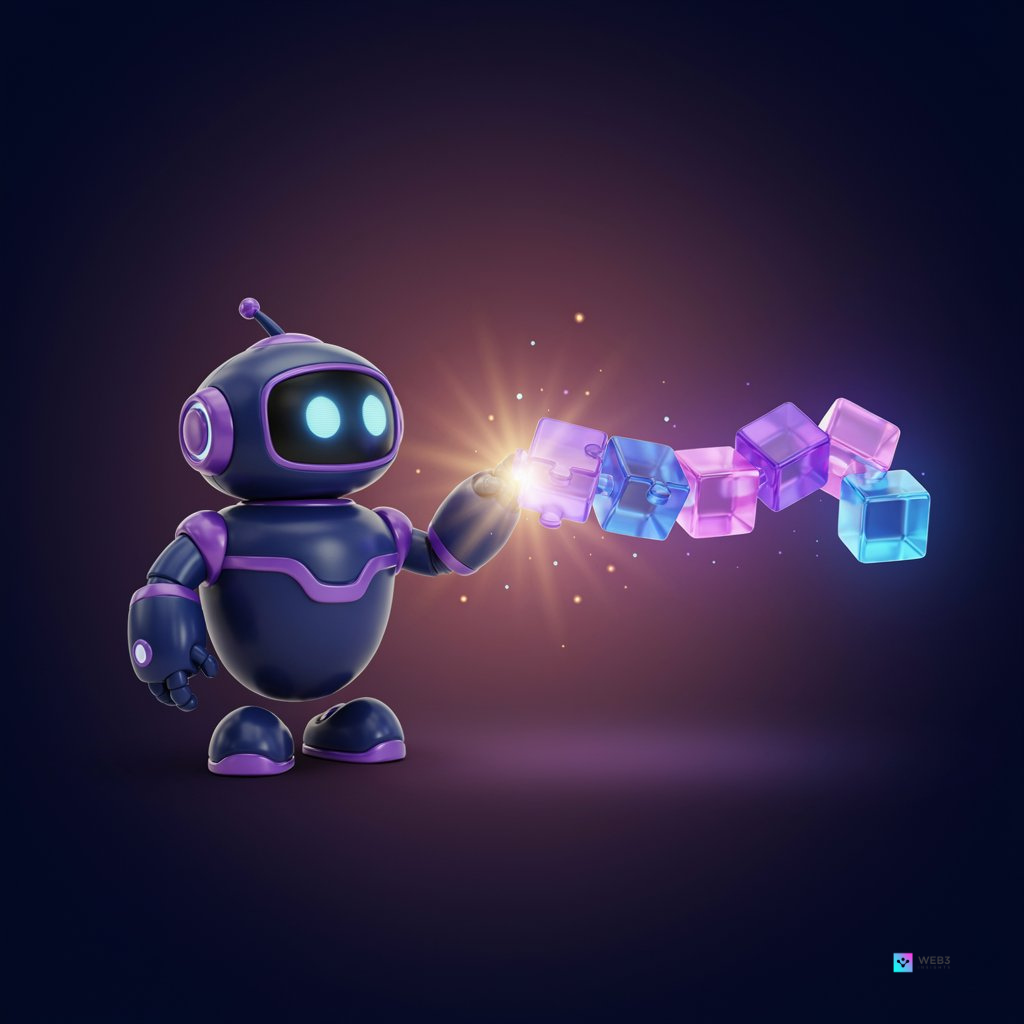
AI and blockchain are two of the biggest technology trends of the decade, and they’re starting to become much more interesting when you put them together.
At first glance, they might seem like completely different technologies.
AI is about making machines smarter.
Blockchain is about creating systems where information, ownership, and transactions can be verified without relying entirely on a central authority.
But here’s where things get interesting.
AI can analyze enormous amounts of data and make predictions or recommendations. Blockchain can provide transparent records, programmable transactions, and verifiable ownership.
Put them together, and you get something neither technology can quite deliver on its own.
We’re already seeing experiments and real-world applications across smart-contract security, fraud detection, decentralized infrastructure, financial automation, and data verification.
So what does this actually mean for crypto and Web3?
Let’s break it down.
Why Combine AI With Blockchain?

Let’s start with the obvious question.
Why does blockchain even need AI?
Blockchain networks are excellent at recording and verifying transactions.
But blockchains aren’t particularly good at understanding complex information or making intelligent predictions.
That’s where AI comes in.
AI can look at huge datasets, identify patterns, detect anomalies, and make predictions.
Blockchain, meanwhile, can record important actions in a transparent and tamper-resistant way.
In a simple version of this relationship:
AI thinks. Blockchain verifies and executes.
That doesn’t mean blockchain automatically makes AI trustworthy. AI models can still make mistakes, and blockchain can’t magically verify whether an AI’s reasoning is correct.
But when the two are designed carefully, blockchain can provide a verifiable layer for data, permissions, transactions, and outcomes.
That’s where the real opportunity starts.
AI Is Making Blockchain Security Smarter

One of the most practical applications is security.
Blockchain networks process huge numbers of transactions, and suspicious activity can sometimes be difficult to spot manually.
AI can analyze transaction patterns and look for behavior that doesn’t fit the norm.
For example, an AI system could flag unusual transaction activity, suspicious wallet behavior, or patterns associated with fraud.
This doesn’t mean AI can identify every scam or hack before it happens.
It means machine-learning systems can help security teams process more information and investigate potential problems faster.
Researchers have identified fraud detection, anomaly detection, and smart-contract security as important areas where AI can enhance blockchain systems.
And honestly, this may be one of the least flashy, but most useful ways AI and blockchain can work together.
AI Can Make On-Chain Data More Useful

Here’s another interesting combination.
Blockchains produce an enormous amount of public data.
Every transaction tells a story.
Who’s moving funds?
Which wallets are becoming active?
Are tokens flowing onto exchanges?
Is activity increasing around a particular protocol?
The problem is that raw blockchain data can be overwhelming.
AI can help turn that raw information into something humans can actually understand.
Instead of staring at thousands of wallet addresses, a trader or analyst could use AI to identify unusual patterns and surface the activity worth investigating.
This is already becoming an important part of crypto research.
And it connects directly to what we discussed in our earlier articles about AI market analysis and Bitcoin analysis.
AI isn’t necessarily creating new information.
It’s helping us make sense of the information that’s already there.
AI Agents Could Change How We Use Crypto
This is where things get really interesting.
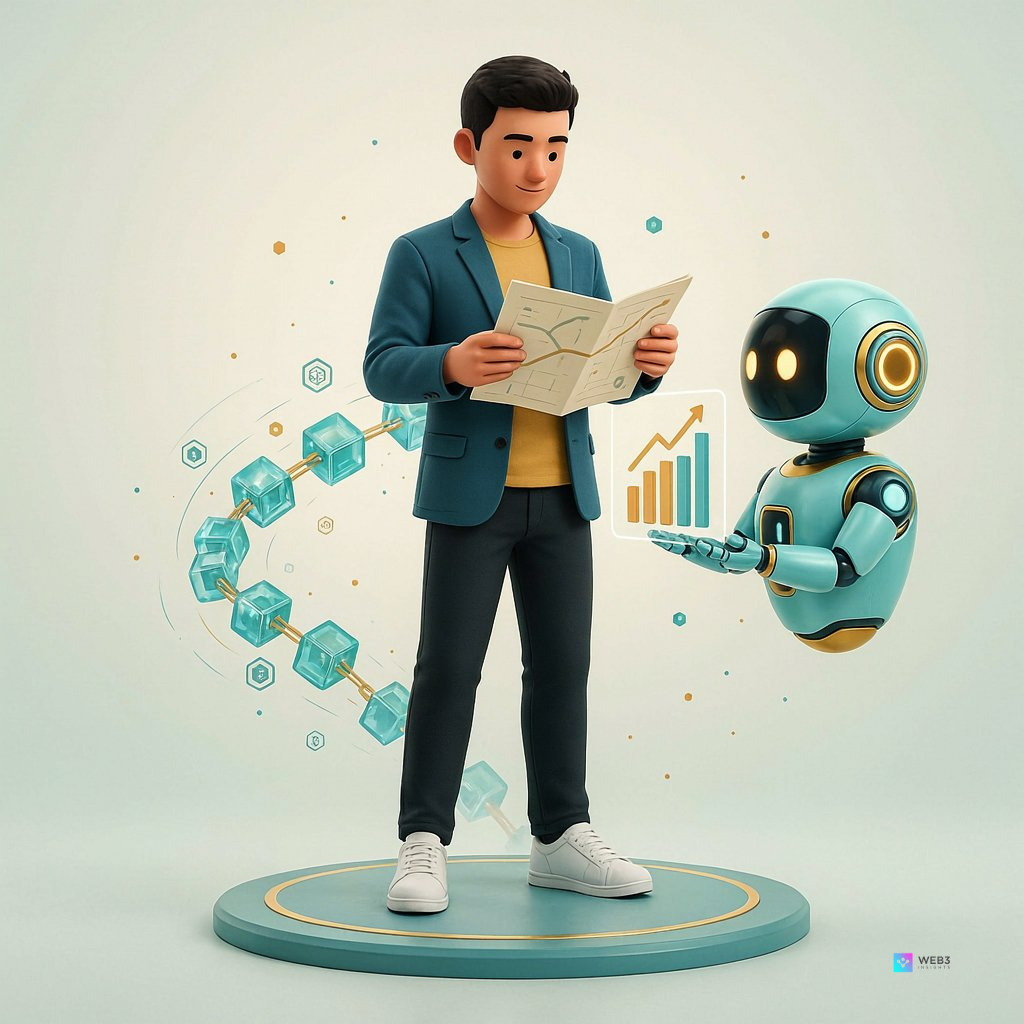
AI agents are designed to do more than simply answer questions.
They can plan tasks, interact with software, and, when given the right permissions, take actions.
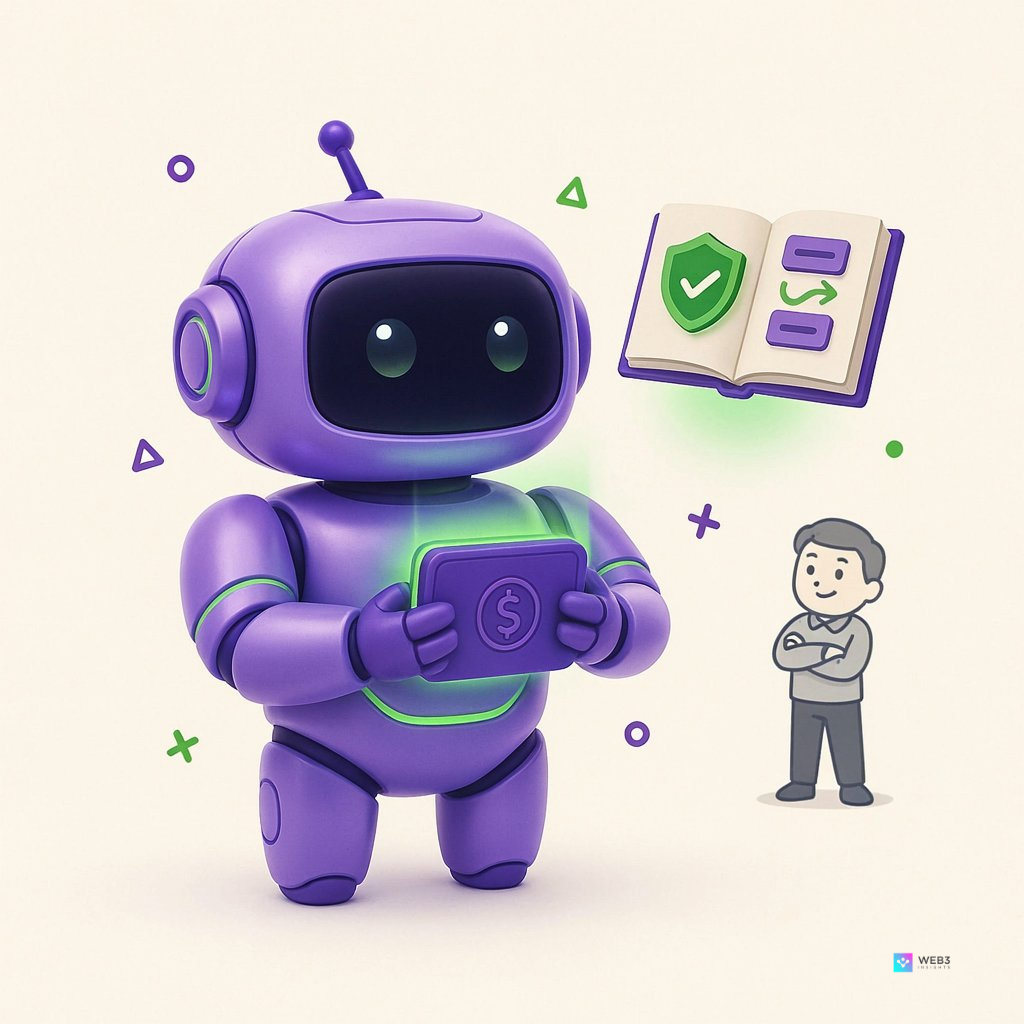
Now give an AI agent access to a blockchain wallet.
Suddenly, the agent can potentially interact with smart contracts, make payments, move assets, or pay for digital services.
That creates a completely different vision of how people and software could interact with crypto.
Instead of you manually signing every transaction, an agent could perform certain actions according to rules you establish.
For example:
“Keep my trading position within this risk limit.”
Or:
“Pay for this API whenever usage reaches this threshold.”
Or:
“Move funds between these accounts when these conditions are met.”
The technology is still evolving, and giving software access to financial assets introduces serious security risks.
But the idea of autonomous software interacting with programmable money is one of the most interesting areas at the intersection of AI and crypto right now. Current 2026 industry reporting points to agent wallets, programmable payments, and AI-driven on-chain actions as emerging areas of development.
What Does This Mean for Crypto Traders?
You might be wondering:
“Cool technology. But where’s the trading angle?”
Fair question.
The AI + blockchain combination could give traders better tools for understanding what’s happening underneath the market.
AI can analyze on-chain activity.
Blockchain provides the underlying data.
AI can detect unusual wallet behavior.
Blockchain provides the transaction history.
AI can analyze smart-contract activity.
Blockchain provides the publicly verifiable record.
This creates a feedback loop where blockchain generates data and AI helps interpret it.
For traders, that could mean faster research and better context when evaluating market movements.
But remember what we’ve said throughout this series:
More information doesn’t automatically mean better trades.
You still need a strategy.
Trader’s Take
AI and blockchain aren’t interesting simply because they’re two trendy technologies.
They’re interesting because they solve different problems.
AI is good at understanding, predicting, and automating.
Blockchain is good at recording, verifying, and settling.
When those capabilities are combined responsibly, they can create applications that are more automated, transparent, and programmable than what we’re used to.
For crypto traders, the biggest opportunity may be the data layer.
Blockchain creates an enormous stream of real-time information.
AI helps turn that information into something useful.
The traders who learn how to work with both technologies won’t necessarily have a crystal ball.
But they may have something more practical:
a much better view of what’s happening underneath the market.